

You Don't Understand China!
On the difficulty of studying a country that makes itself hard to study

There’s a line you hear a lot if you write or follow news on China — from officials, from academics, from overseas Chinese commentators on social media, and from a certain kind of Western scholar who has spent enough time in Beijing to develop both a facility with the language and a reflex for its defensiveness: you don’t understand China! 你不了解中国!
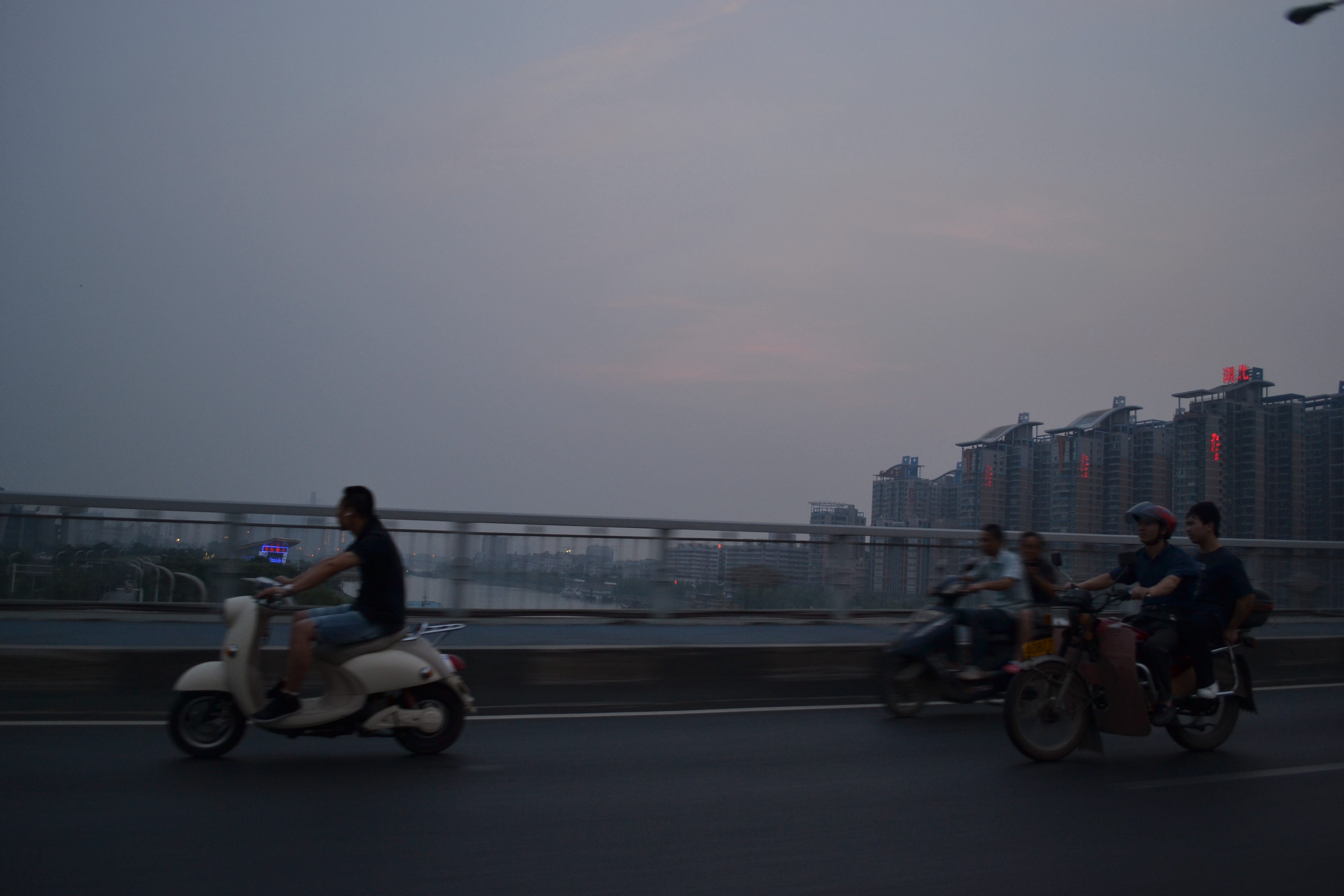
Yes, that’s right YOU. You, the boorish uncultured Barbarian who has not spent years dedicated to the study of our difficult impenetrable language and our 5000+ years of glorious history. This criticism gets deployed in various situations: by critical scholars, in heated exchanges on X, and to shut down opinions someone disagrees with. It implies a more sophisticated interlocutor exists somewhere who really gets it, and who would reach different conclusions. Of course, no one has ever been able to define to me who precisely does FULLY understand China or what constitutes full understanding. Indeed, I don’t think anyone can ever fully understand a country, or any complex topic for that matter. I certainly don’t fully understand my own country. If I had, I may have been less surprised on the morning of November 9, 2016 when I awoke to the news of a Trump victory and fellow teachers and classmates in Cambridge, MA in a politically induced depression lasting for weeks and arguably into the present.
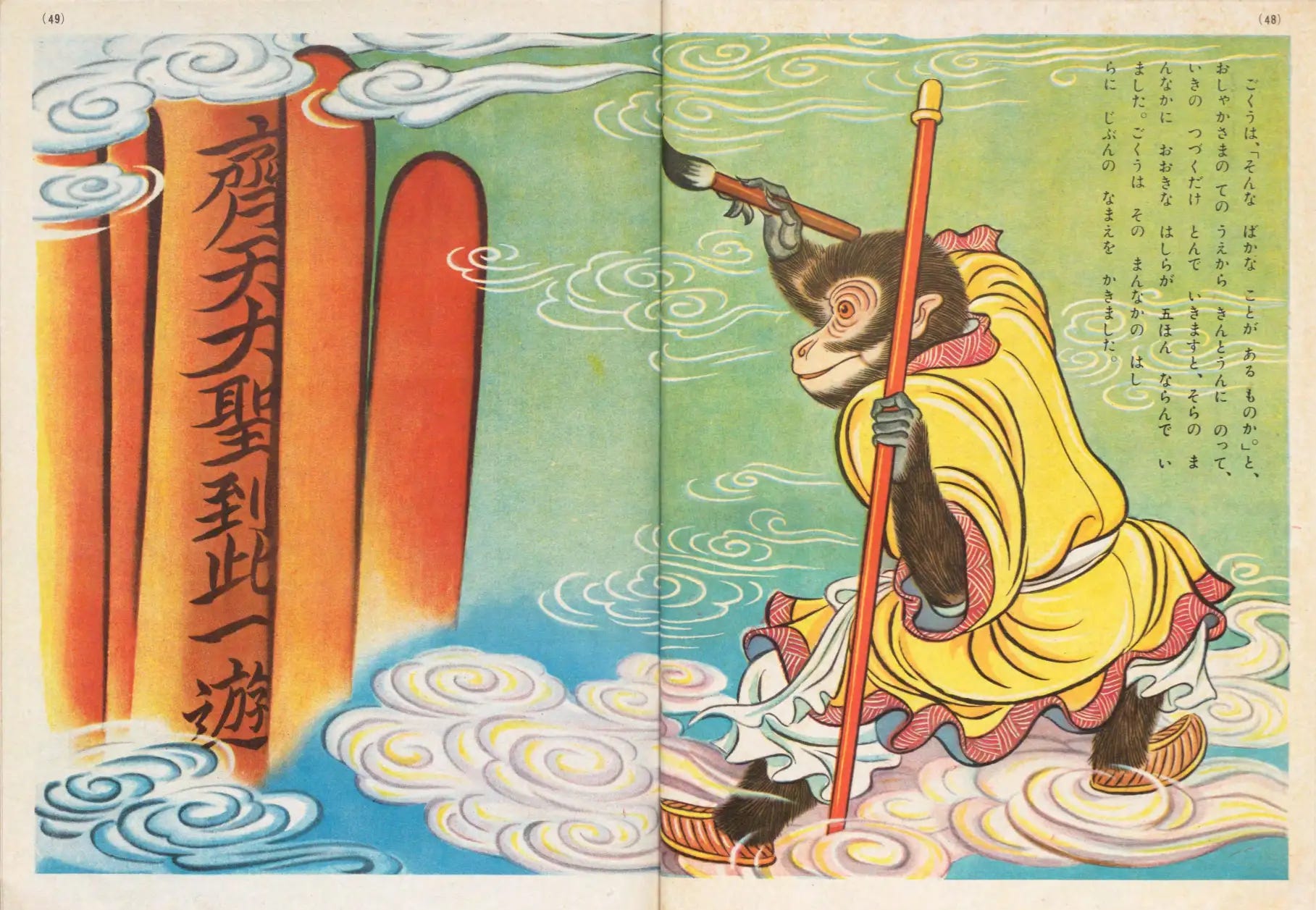
Understanding China is indeed a never-ending quest, not unlike the famous episode from the Chinese epic novel “Journey to the West” (西游记) in which Sun Wukong (the monkey king) boasts to the Buddha of his powers and leaps 108,000 li to the edge of the universe to try to prove that he can escape the Buddha’s grip. He lands at the edge of the world only to find five massive pink pillars reaching into the sky and defiantly urinates on one of them, writing “the great sage equal to heaven was here.” The Buddha reveals that the pillars were really his fingers. Wukong is subsequently imprisoned under a mountain for five hundred years so he could learn patience and humility. I hope those embarking on a study of China don’t have to spend 500 years under a mountain (or in a secret detention facility), but more seriously the story is a metaphor for the humility of the individual in a boundless and infinite universe, an apt suggestion of humility for anyone who claims “expertise” or mastery of a subject.
As most of you know, I’m an American who has dedicated the better part of 17 years to studying, researching, and writing about China. I first set foot in Beijing in the cold February of 2009, just months after the city hosted the Olympics in what was seen as a global “coming out party” --certainly not the queer kind, mind you! The period leading up to the Olympics was a high-water mark of China’s global openness, optimism, and U.S-China relations. It would be three years until a deputy of Chongqing Party Secretary Bo Xilai sought refuge in the U.S. consulate in Chengdu, four years until Xi Jinping ascended to the top leadership and seven more until Trump’s victory disrupted assumptions that America would always support free trade. But even in 2009, the signs were there that a shift was underway. I remember my Chinese teacher in Capital Normal University using the ’08 financial crisis to practice Chinese grammatical constructions at a moment when belief in Western global leadership was shattered by the speculative crisis originating in US sub-prime housing markets. Yinwei (because) quanqiu jingji weiji (the global financial crisis) suoyi.. “The Chinese government is implementing various stimulus measures to support the economy.” Only a few months after I first set foot in the country, Western social media platforms were almost entirely blocked in the summer of ’09 following unrest in Urumqi, Xinjiang by Uighur separatists that left scores dead and the city.
But that semester in Beijing and the years living in China as a Princeton in Asia fellow at a small Beijing nonprofit advocating for the preservation of the city’s hutong neighborhoods, and later as a Fulbright Scholar at a university in Xi’an, I took it all in with the wide-eyed wanderlust of a 21-year old set loose in a foreign land. I traveled across 25 provinces by the old clunky Z and T trains, sleeping in软卧 ruanwo and 硬卧yingwo compartments with 3 or 5 other strangers on journeys of up to 20 hours. On one of these from Beijing to Harbin during Chinese New Year, I shared dumplings with strangers as we watched fireworks crackle above each village that we passed in the night. On another overnighter from Jiayuguan, the westernmost part of the great wall in Gansu province to Urumqi in Xinjiang, I mediated a spirited discussion between a young man and an older gentleman on the merits and downsides of American democracy. All of these experiences gave me a profound curiosity and respect for a country that felt often like a world unto itself—not exceptional or something exotic, but indeed an entire world that operated according to its own rules, its own history and traditions, that you could disappear into and potentially spend years learning about only to find that there was always more and so much that you would never know—a good metaphor for scholarship, learning, and life in general.
Since those early years in my 20s roaming the hutongs of Beijing and sleeping in overnight train bunks, I’ve continued engagement with China in various capacities. In 2017, I helped launch a joint research center between Harvard’s Graduate School of Design and Peking University on sustainable urbanism. The collaboration fell apart in 2018, not for political reasons (that I am aware of), but out of mundane squabbles over financing and money between two deans. But only a few months after I left Beijing for another position in Singapore, Trump launched his first tariff war in March of 2018. The tides of the relationship were turning from engagement to outright hostility and competition. During Covid I watched from afar as the country oscillated between a cover up, draconian lockdowns, and then technocratic management of a disease that proved more challenging in open societies with ingrained ideas about personal freedom. Returning to China in 2023 for the first time since 2019, I expected to be met with hostility or suspicion and braced myself for awkward questions and annoying debates with loud taxi drivers. But for the most part these did not occur. I had many conversations with people, some more nationalist or pro-government and others openly critical of their government, but almost none bore personal hostility to me as an American. In a long 顺丰 shunfeng1 drive in Inner Mongolia, a driver told me how much he admired America and despised Russia for its war against Ukraine, something directly contradicting China’s tightly controlled messaging on the conflict. When people did debate with me, they usually approached it as a friendly exchange of ideas, playfully challenging me and rehashing certain talking points, but not with any personal animosity.
In the last few years, though, as an academic who continues to write on China, it’s becoming increasingly difficult to do both critical and engaged scholarship on the PRC and also maintain access and relationships in the country. I saw this firsthand in a recent incident that occurred at a leading academic journal. Many of you have followed my writing on Xiong’an New Area, which I began an interest in during 2020 lockdowns in the U.S. as I followed the city’s construction from afar, and finally visited in the summer of 2023. The project is controversial, mostly because it is a signature initiative of Xi Jinping. It has been largely seen as a failure so far, even though investment continues to flow into the city. Initially trying to work through contacts at Tsinghua University to talk to people involved in its planning, I found myself at an impasse. Xiong’an was the “city that must not be named”— no one wanted to be on the record saying anything about it. I asked an old friend who was a professor at a University in Beijing if he would write me a letter of introduction to colleagues at another university to facilitate an interview. I just needed a letter with a nice official chop on it for introduction purposes. He politely declined, fearing it could cause him problems later. Ten years ago, such a favor might have been routine. But today this sort of thing was impossible. Eventually, through introductions of a 30-something urban planner who had worked in Xiong’an for some time, I was able to talk to various people directly involved in planning and design of the city. Nothing high level. But in reality, talking to mid or entry-level workers was more revealing, as higher officials would mostly not divulge anything of interest, anyways. Throughout my research, I tried to maintain an open mind about the city. My first article on the city, published in Cambridge Journal of Regions Economies and Societies, examines the city as a lens into the shifting “urban ideology” of Xi’s China. While I don’t take a position on the city’s “success or failure” (how could I for a so-called “1000-year project) there are certainly aspects of the city that are problematic and worrying. Not least of which is its construction in a floodplain, and the tens of thousands of villagers whose homes were demolished just so they could be moved into apartments in a half-occupied new district built before the rest of the city was completed—of course not something unique to Xiong’an, as most observers of urbanization in China know. After I posted my article on X, someone remarked that, “Oh I didn’t realize a leading journal was ‘pro-China’ now.” I don’t think he read my article, in which I remarked on the city’s various challenges, otherwise he would have not come to that simplistic assessment. But it indicated how anything written about China gets immediately put into the black/white camp—for or against.

I recently contributed another article on the city to a proposed special issue in a leading journal. Compared to my first article, this one does indeed take a more critical tone, particularly related to the issue of the city’s flooding risk.2 Typically, special issues are organized so that an editor invites contributions and goes through an internal review process before individual authors submit to the journal. I went through this process with the SI editors, and submitted. Not two weeks had passed and I woke up one morning to an email telling me my article was “desk rejected” with a generic explanation that it wasn’t novel or a contribution to scholarship. I thought it a bit strange, since the special issue editors had already reviewed it and deemed it ready to send out for review. Later in the day I found out several other authors in the issue had their papers similarly desk rejected soon after submitting, and one of them was a Chinese national based in Hong Kong with another article about China. The editor in chief of the journal, based at a university in China, provided no comment to me or the other authors after repeated requests for clarification, and as of writing had still refused to respond directly even to the special Issue editors, who are themselves established academics at leading research universities. It seemed highly plausible to me and the guest editors that this was a case of political censorship. The lack of communication from the editor in chief was suspicious, as was the fact that most of the rejected articles addressed China in some way. Of course, proving political bias is notoriously hard in academia. Editors could list all sorts of reasons why an article failed to meet their standards. But the overruling of a special issue editor and the lack of communication spoke volumes. The special issue editors promptly decided to pull the special issue.
The episode indicated to me how hard it is becoming to navigate critical scholarship and the deepening culture of paranoia in Chinese academia. To be sure, there are scholars doing engaged critical work in China, and more often than not by those of Chinese ancestry working outside of the mainland. I also don’t want to suggest that doing such work in China is easy and that mainland Chinese scholars don’t face real risks, because they do. The reality is that for academics based at mainland institutions who are under political pressure and surveillance, it is becoming increasingly impossible to fulfill both the obligations of political allegiance in China with the expectation for academic impartiality that (should) be expected for an editor of a leading international journal.
To be sure, I don’t pretend to full objectivity myself, or think that this is a realistic expectation for anyone. But I have tried as much as possible to be objective in my writing and research on China. Sure, I am an American. I have certain values, perhaps most critical of which is a belief in freedom of expression, inquiry, and open debate. No matter how much postcolonial de-constructivist scholars will tell you that rationality is a Western or colonial construct, research and scientific understanding is impossible without certain basic preconditions, most crucial of which is openness to different ideas and viewpoints, and an assumption that all research is open to critique and reassessment. Sure, Trump’s America has also become hostile to scholarly inquiry and academic research, which should be condemned by scholars in the U.S. and abroad just as censorship in other countries is. However, the constraints on academics in China are still far greater than anything faced by U.S.-based academics— funding cuts and Trumpian threats aside. Anyone suggesting an equivalence between the CCP’s control of freedom of expression and what’s happening in the U.S. needs a healthy dose of reality serum. But again, two wrongs don’t make a right—something that often gets lost in arguments on human rights or other sensitive issues between the two countries—“look at homeless people in the U.S., how dare you criticize what we’re doing in Xinjiang!!”— on and on this tiresome exchange often goes in various forms.
On both sides of the Pacific (and globally) academia is often imbued with cultures of hierarchy and deference that means the situation that I experienced recently usually goes unreported. We can and will submit to a different journal. Often, out of fear for career progression, tenure, or maintaining access, academics are too easy to let these improprieties go unreported and unpublicized. If academics can’t hold themselves to standards of accountability, why should anyone trust our scholarship? No wonder why academia has also lost public trust along with many other institutions.
Despite all of this, I continue to stay engaged in research and writing on China, not out of any high-minded heroism but simply because I continue to find it a fascinating place where I learn something new and have rewarding experiences each time I visit. With reels of instant China content available online, it is tempting to think that the slow publishing schedules of academic research are unsuited to the current media environment. But as scholars of disinformation like Yuval Noah Harari have noted, “more information” doesn’t mean better knowledge, or better decisions.3 Despite our access to near real-time information, we (in the non Chinese speaking world) are generally worse off in terms of our knowledge of China than we were with far less readily information, but when we had more sustained reporting and on the ground journalists and researchers, and when there wasn’t as much disinformation floating around. This is not unique to China, it’s a general condition of overly saturated and polarized information ecosystems.
The “you don’t understand China” critique assumes that genuine understanding is achievable — through time, immersion, language, good faith. I think that’s broadly right. Area expertise matters. So does language, and historical depth, and real engagement with Chinese sources and scholarship. But understanding also requires access. It requires being able to ask questions and get honest answers, interlocutors who aren’t operating under surveillance or reporting obligations, archives that are open and statistics that are actually published. Over the past decade those conditions have been steadily degraded. Archives that opened in the 1990s have been shut again. International scholarly collaboration has been brought under new security frameworks. The Foreign NGO Management Law, the data security regulations, the expanded definition of state secrets — these all constrain what can be known, shared, and published about China in concrete ways. Researchers inside the system can’t fully comply with them and maintain the standards of open scholarship. Researchers outside can’t compensate. I know many China scholars who did their research during the period of openness that I first experienced as an undergraduate. Many of them are no longer doing research in China or on China, either due to difficulty of access, concern for the safety of people they interview, or just difficulty of getting approval from home institutions. I see Chinese-born scholars or current PhD students in the U.S. face similar hurdles doing fieldwork in China, even risking being accused of espionage due to their affiliation with American institutions—so the closing off and paranoia doesn’t only affect white foreigners but also Chinese nationals and those of other countries.
That’s why when I see calls from friends and colleagues about the need for more “China expertise” in the U.S, I can’t help but be skeptical. There was a lot of genuine effort to cultivate that expertise over years and decades of research and exchange. Singapore’s NUS has an almost unofficial blanket ban on scholars doing research in China—not because of any restrictions China has imposed on Singapore, with which it maintains generally friendly relations, but because university administrators are afraid of running afoul of China’s 2017 Data Protection Law, which bans the export of data on Chinese individuals outside the country. Research must be done with local partners, but non-mainland academics and even academics of Chinese ancestry based in Singapore are discouraged from pursuing fieldwork there. This probably says more about risk-averse attitudes of Singaporean bureaucrats than it does about China, but the effect is similar—less understanding, less research on the ground, the decreased scholarly exchange, even between two countries that have mostly friendly relations.
What I find surprising, living in Singapore, is how thoroughly the “ten-foot giant” version of China has come to dominate public conversation here too. Singapore has advantages that the Beltway Blob doesn’t — it’s a majority-ethnic-Chinese city-state with deep ties to the mainland, plenty of people with family connections that provide ground-level texture, a long tradition of watching China closely for practical reasons. It should be capable of holding a more complex picture. And yet the conversations I move through in policy and business circles have tilted toward the dazzle of Chinese technological capability — the drone shows, the factory floors, the speed of deployment. Less discussed: youth unemployment running above twenty percent before Beijing stopped publishing the data, or the graduate students delivering food because the white-collar economy can’t absorb them, or the persistent poverty in interior provinces that large showcase projects are partly designed to draw attention away from.
The gaps were on full display during an event last year Singapore. A professor gave a talk on China’s growing cultural influence around the world. I asked a question of how we should reconcile the extreme pessimism inside China, something I have felt viscerally on my recent trips, with the very real progress in certain technological areas. It’s a feeling that anyone who lived through “the good days” would be able to tell you by comparison, but those who didn’t live in China during that time might not. This might just seem like how it’s always been to someone who arrives now for the first time. After the talk, an older Singaporean in the audience came up to me. “So you’ve been to China recently? You didn’t see the robots, and the EVs?” He asked me almost incredulously. “Of course, I did.” How could I not, recalling my visit to an exhibition of consumer robots in Shanghai last October, where I saw robotic capybaras, massage robots and AI-enabled pendants that read your emotions through body temperature. These sexy images of advanced technology are easily transmissible on social media. They are not fake, China has seen real progress and in some areas is indeed world leading, such as in clean energy and electric vehicle production. But simplistic videos of influencers raving about drone delivery in Shenzhen or night light shows in Chongqing cannot convey the stagnant wages, youth unemployment, empty apartment blocks and bankrupt local governments —something that even just a few days on the ground conveyed to me.

The uncomfortable implication is that some of the people most loudly making the “you don’t understand China” argument are embedded in the same institutional apparatus that has made China harder to understand. The critique often comes from genuine frustration with reductive Western coverage, which is real and understandable. But there’s a circularity to it that’s difficult to ignore. I don’t think Western coverage of China is generally good. A lot of it is historically shallow, prone to outdated mental frameworks, more interested in China as a threat to be assessed than a society to understand. The “China threat” discourse in Washington has its own closed loops. There’s a version of China skepticism that functions more as an ideological stance than an analytical one. The “you don’t understand China” critique lands on legitimate targets often enough that it can’t simply be waved away.
But the deterioration of the relationship has produced a polarization of coverage that damages everyone’s understanding, and not just Western journalists. Incentive structures now punish nuance fairly consistently. Algorithms reward clear tribal allegiances — you’re either a China hawk or a panda hugger — and the audience for a carefully qualified, genuinely uncertain analysis is much smaller than the audience that desires to have its existing view confirmed. Chinese censors perform the same function from the other direction, filtering out complexity that doesn’t fit the preferred picture. The space for analysis that is trying to figure something out, rather than perform a position, has become quite limited.
What this produces is a consistent split. American commentary on China has fractured into two camps that rarely engage each other: one cataloguing China’s technological rise — the EVs, the robotics, the solar manufacturing, the infrastructure — and one focused on structural fragilities, the property debt, the demographics, the youth unemployment. Both are drawing on real things. Neither is the whole picture, and the oscillation between anxiety about Chinese power and anticipation of Chinese decline doesn’t quite add up to proper analysis. These things coexist. Treating one side of the ledger as the whole story is its own kind of failure, and it’s not limited to Washington.
Early last year, I was trying to connect with a professor in Guizhou for my research on digital infrastructure in the Gui’an New Area. We were put in touch through mutual contacts. Before we could arrange to meet, she asked me to send her my passport documents. Initially I didn’t think this was a big deal. I knew Chinese university campuses were now routinely requiring IDs including foreign passports for entry. “Ahh, so I can meet you at the university?” I asked her through Wechat. “No no, just so I can meet you somewhere outside for coffee.
Later she told me that she had previously met a foreign academic without reporting the contact to her superiors, and it had caused her problems. She wasn’t going to let that happen again. Sending over my documents gave her a paper trail she could produce if anyone asked. On one level, a sensible precaution. On another, a fairly stark illustration of what “access” now means in practice —bureaucratic precautions required around the simple act of two researchers having a conversation. I sent the documents and went.
The morning I arrived in Gui’an, she picked me up in her car at a subway station near her university. We spent nearly the whole day together, and she drove me out to villages in the surrounding countryside, talking openly about where government programs had worked and where they hadn’t, the effects and limits of investment in data centers on the local economy. We met a young recent graduate working in a village as a new cadre, trying to promote local cultural tourism, who discussed the limits of digitization and a need to focus on cultural value over trendy things like “smart cities.” In the evening she took me to an authentic Guizhou hotpot restaurant near campus and we talked for another couple of hours about her research and her students and her sense of where things were heading. She was warm and generous and entirely without the guardedness that the earlier formalities might have suggested.
The bureaucratic reticence about meeting me were hard to square with the warm hospitality and time she generously shared with me. That gap is part of what makes China genuinely difficult but also rewarding to engage with. It’s not that understanding is impossible. The people I’ve met in China — researchers, planners, students, the professor in Guizhou who spent a day showing me her work are still as curious and eager as before to have engagements and welcome visitors. The difficulty is with the system that now imposes more costs on these types of informal interactions. It’s not impossible to do research in China these days. But you better have a good understanding of what you can and cannot see, and be prepared to accept meeting people outside their places of work, in coffee shops, even in online meeting rooms or in restaurants.

I know people who refuse to go back to China after spending years in the country. Besides the political issues and barriers to access, navigating China’s digital ecosystem of apps can be overwhelming. Luckily I maintained a Chinese bank account from my time working in China, and can easily get a local phone number which allows for more seamless re-entry each time I visit. Without either of those, getting money in and out and paying for things can be a challenge—although much easier since about 2022 when Wechat and Alipay both enabled foreign credit cards to be used for purchases on these two dominant payment platforms. Despite the barriers I would encourage these people to go back. Yes, it is harder to do certain kinds of research in China today. But given the ongoing tension between China and the West, it’s arguably more important than ever before for Americans and others in particular to have more nuanced and layered understanding of the country, its successes, challenges, and other aspects of life that are no longer deemed as important to outside observers as AI and robots—in other words, everyday life. Learning and knowledge is not a finite process, it is never over. Just like Wukong, you could find yourself reaching the limits of available knowledge only to realize you never left the palm of the Buddha’s hand in the first place.
Shunfeng is an app that lets you book rides with drivers passing by part of your intended route.
https://edition.cnn.com/2023/08/17/china/china-floods-xiongan-hebei-xi-jinping-intl-hnk
Harari, Yuval Noah. 2024. Nexus: A Brief History of Information Networks from the Stone Age to AI. Random House.
Thankyou Andrew for your insights. I haven't been back to China for over 15 years so it isn't clear to me the extent to which constraints on academics in China are greater than before. As someone who's academic focus is the Middle East, including Palestine studies there are similar real threats faced by US academics. Many colleagues have had their tenure cancelled, funding cut, received multiple threats, or cancelled simply because - like you- their area of expertise is deemed inappropriate. I think the issues you raise are important, but are far broader than Chinese studies.
I would add another layer: even when data and access are available, many outside frameworks still misread China because they look mainly at property, consumption, debt, and headline GDP, while underreading production, industrial upgrading, supply-chain depth, energy systems, state capacity, and manufacturing organization.
That is why “you don’t understand China” should not be used as a slogan to shut down debate. It should be treated as a methodological challenge. China has to be studied as a system: industrial capacity, state capacity, capital allocation, social pressure, political control, technology diffusion, and ordinary people’s lives all have to be analyzed together. Otherwise we only get fragments: either the spectacular China of factories, EVs, robots, and high-speed rail, or the troubled China of debt, unemployment, censorship, and declining expectations.
The hard part is that both Chinas are true. The more important question is how they interact.